This post may contain affiliate links which means if you make a purchase through my links, I will get a small commission at no extra cost to you. I only recommend the products I love and trust.
If You Loved the 1930s Setting of The Calamity Club (During the Great Depression), Read These Next
If the 1930s setting was one of the things you loved most about The Calamity Club, these historical fiction books are worth adding to your list. Just to be clear, these aren’t books with the same plot or similar characters. What connects them is the Great Depression era and 1930s setting. Some take you into the Dust Bowl, others follow struggling families, migrant workers, or people simply trying to build a life during one of America’s hardest decades. So if The Calamity Club left you wanting to read more stories set around the same time in history, start with these.
This Tender Land by William Kent Krueger
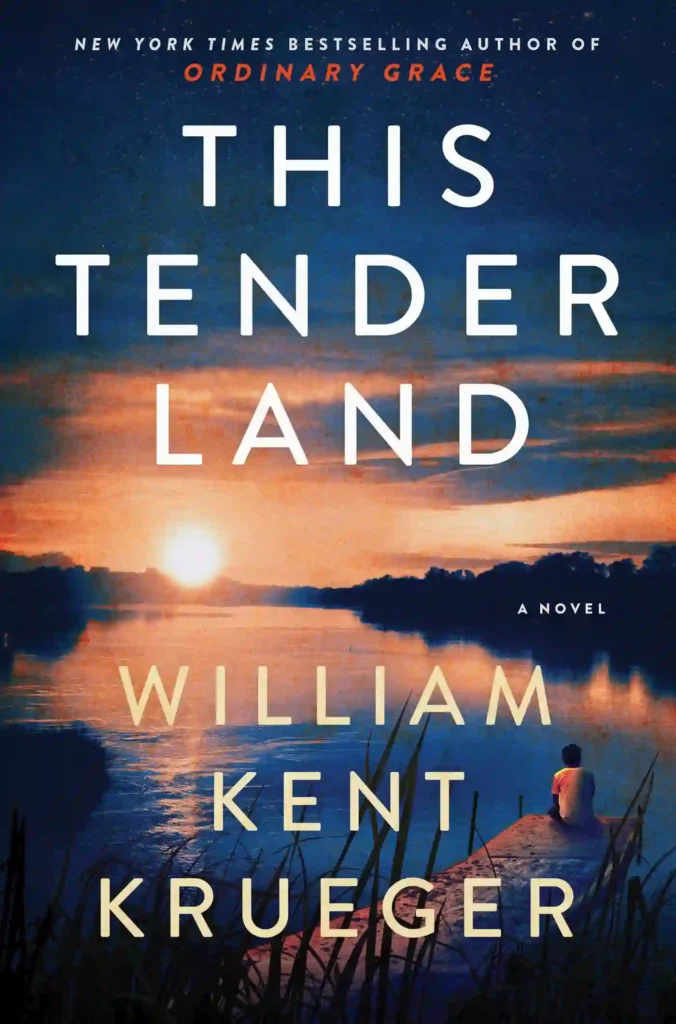
Set in Minnesota in 1932, This Tender Land follows Odie and his brother Albert, two orphans living at a harsh boarding school for Native American children. After something terrible happens, they escape with their friends Mose and Emmy and travel by canoe toward the Mississippi. You will love adventure, friendship, found family, and a strong sense of what life was like during this difficult time.
In the summer of 1932, on the banks of Minnesota’s Gilead River, the Lincoln Indian Training School is a pitiless place where Native American children, forcibly separated from their parents, are sent to be educated. It is also home to Odie O’Banion, a lively orphan boy whose exploits constantly earn him the superintendent’s wrath. Odie and his brother, Albert, are the only white faces among the hundreds of Native American children at the school.
After committing a terrible crime, Odie and Albert are forced to flee for their lives along with their best friend, Mose, a mute young man of Sioux heritage. Out of pity, they also take with them a brokenhearted little girl named Emmy. Together, they steal away in a canoe, heading for the mighty Mississippi in search for a place to call home.
Over the course of one unforgettable summer, these four orphan vagabonds journey into the unknown, crossing paths with others who are adrift, from struggling farmers and traveling faith healers to displaced families and lost souls of all kinds. With the feel of a modern classic, This Tender Land is an enthralling, bighearted epic that shows how the magnificent American landscape connects us all, haunts our dreams, and makes us whole.
BUY NOW ON AMAZON | LISTEN FREE ON AUDIBLE
The Four Winds by Kristin Hannah

In Texas in 1934, Elsa Martinelli and her family are barely holding on as drought and dust destroy their farm. Eventually, Elsa has to decide whether to stay or take her children west to California in search of work and a better life. The Four Winds really puts you inside the Dust Bowl years, especially the poverty, migration, and impossible choices ordinary families had to make.
Texas, 1934. Millions are out of work and a drought has broken the Great Plains. Farmers are fighting to keep their land and their livelihoods as the crops are failing, the water is drying up, and dust threatens to bury them all. One of the darkest periods of the Great Depression, the Dust Bowl era, has arrived with a vengeance.
In this uncertain and dangerous time, Elsa Martinelli—like so many of her neighbors—must make an agonizing choice: fight for the land she loves or go west, to California, in search of a better life. The Four Winds is an indelible portrait of America and the American Dream, as seen through the eyes of one indomitable woman whose courage and sacrifice will come to define a generation.
From the #1 New York Times bestselling author of The Nightingale and The Great Alone comes an epic novel of love and heroism and hope, set against the backdrop of one of America’s most defining eras—the Great Depression.
BUY NOW ON AMAZON | LISTEN FREE ON AUDIBLE
The Giver of Stars by Jojo Moyes

Set in Depression-era Kentucky, Alice Wright leaves England after marrying an American, only to find herself trapped in another unhappy situation. Her life changes when she joins a group of women delivering books on horseback to isolated Appalachian families. Inspired by the real Pack Horse Library Project, The Giver of Stars is especially good if you like female friendships, books about books, and historical fiction based around lesser-known history.
From the author of Me Before You, set in Depression-era America, a breathtaking story of five extraordinary women and their remarkable journey through the mountains of Kentucky and beyond.
Alice Wright marries handsome American Bennett Van Cleve hoping to escape her stifling life in England. But small-town Kentucky quickly proves equally claustrophobic, especially living alongside her overbearing father-in-law. So when a call goes out for a team of women to deliver books as part of Eleanor Roosevelt’s new traveling library, Alice signs on enthusiastically.
The leader, and soon Alice’s greatest ally, is Margery, a smart-talking, self-sufficient woman who’s never asked a man’s permission for anything. They will be joined by three other singular women who become known as the Packhorse Librarians of Kentucky.
What happens to them–and to the men they love–becomes an unforgettable drama of loyalty, justice, humanity and passion. These heroic women refuse to be cowed by men or by convention. And though they face all kinds of dangers in a landscape that is at times breathtakingly beautiful, at others brutal, they’re committed to their job: bringing books to people who have never had any, arming them with facts that will change their lives.
Based on a true story rooted in America’s past, The Giver of Stars is unparalleled in its scope and epic in its storytelling. Funny, heartbreaking, enthralling, it is destined to become a modern classic–a richly rewarding novel of women’s friendship, of true love, and of what happens when we reach beyond our grasp for the great beyond.
BUY NOW ON AMAZON | LISTEN FREE ON AUDIBLE
The Book Woman of Troublesome Creek by Kim Michele Richardson

In 1936 Kentucky, 19-year-old Cussy Carter becomes a traveling librarian, riding her mule through the Appalachian mountains to bring books to families who have very little. Cussy also has blue-tinted skin caused by a rare genetic condition, which makes her a target of prejudice. There is a lot here about poverty and discrimination, but also about how much something as simple as access to books could mean during the Depression.
In 1936, tucked deep into the woods of Troublesome Creek, KY, lives blue-skinned 19-year-old Cussy Carter, the last living female of the rare Blue People ancestry.
The lonely young Appalachian woman joins the historical Pack Horse Library Project of Kentucky and becomes a librarian, riding across slippery creek beds and up treacherous mountains on her faithful mule to deliver books and other reading material to the impoverished hill people of Eastern Kentucky.
Along her dangerous route, Cussy, known to the mountain folk as Bluet, confronts those suspicious of her damselfly-blue skin and the government’s new book program. She befriends hardscrabble and complex fellow Kentuckians, and is fiercely determined to bring comfort and joy, instill literacy, and give to those who have nothing, a bookly respite, a fleeting retreat to faraway lands.
BUY NOW ON AMAZON | LISTEN FREE ON AUDIBLE
Stoner by John Williams

William Stoner grows up in a poor Missouri farming family but discovers a love of literature after being sent to university to study agriculture. He becomes a professor, and the book quietly follows him through his career, difficult marriage, family problems, love, and disappointments. This isn’t mainly a Great Depression novel, but part of Stoner’s adult life takes place during that period. It’s much more about one ordinary man’s entire life than the Depression itself.
William Stoner is born at the end of the nineteenth century into a dirt-poor Missouri farming family. Sent to the state university to study agronomy, he instead falls in love with English literature and embraces a scholar’s life, so different from the hardscrabble existence he has known. And yet as the years pass, Stoner encounters a succession of disappointments: marriage into a “proper” family estranges him from his parents; his career is stymied; his wife and daughter turn coldly away from him; a transforming experience of new love ends under threat of scandal. Driven ever deeper within himself, Stoner rediscovers the stoic silence of his forebears and confronts an essential solitude.
John Williams’s luminous and deeply moving novel is a work of quiet perfection. William Stoner emerges from it not only as an archetypal American, but as an unlikely existential hero, standing, like a figure in a painting by Edward Hopper, in stark relief against an unforgiving world.
BUY NOW ON AMAZON | LISTEN FREE ON AUDIBLE
Out of the Dust by Karen Hesse
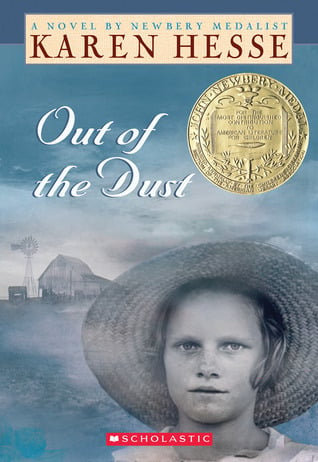
Set in Oklahoma during the Great Depression, this follows 14-year-old Billie Jo as her family struggles through devastating dust storms, poverty, and personal tragedy. Out of the Dust is written in free verse, so it reads very differently from a traditional historical novel. Despite being short, it gives you a strong picture of what living through the Dust Bowl could have felt like.
When Billie Jo is just fourteen she must endure heart-wrenching ordeals that no child should have to face. The quiet strength she displays while dealing with unspeakable loss is as surprising as it is inspiring. Written in free verse, this award-winning story is set in the heart of the Great Depression. It chronicles Oklahoma’s staggering dust storms, and the environmental–and emotional–turmoil they leave in their path. An unforgettable tribute to hope and inner strength.
BUY NOW ON AMAZON | LISTEN FREE ON AUDIBLE
West With Giraffes by Lynda Rutledge
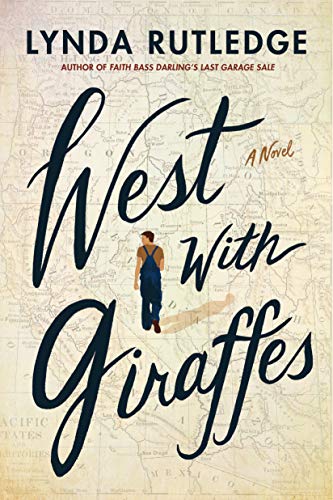
It’s 1938, the Depression still hangs over America, and two giraffes have survived a hurricane while crossing the Atlantic. Young Woodrow ends up helping transport them across the country to the San Diego Zoo. Inspired by a true story, this is a road-trip adventure with animals, memorable characters, and plenty of Depression-era America in the background. West With Giraffes is one of the lighter choices on this list.
Woodrow Wilson Nickel, age 105, feels his life ebbing away. But when he learns giraffes are going extinct, he finds himself recalling the unforgettable experience he cannot take to his grave.
It’s 1938. The Great Depression lingers. Hitler is threatening Europe, and world-weary Americans long for wonder. They find it in two giraffes who miraculously survive a hurricane while crossing the Atlantic. What follows is a twelve-day road trip in a custom truck to deliver Southern California’s first giraffes to the San Diego Zoo. Behind the wheel is the young Dust Bowl rowdy Woodrow. Inspired by true events, the tale weaves real-life figures with fictional ones, including the world’s first female zoo director, a crusty old man with a past, a young female photographer with a secret, and assorted reprobates as spotty as the giraffes.
Part adventure, part historical saga, and part coming-of-age love story, West with Giraffes explores what it means to be changed by the grace of animals, the kindness of strangers, the passing of time, and a story told before it’s too late.
BUY NOW ON AMAZON | LISTEN FREE ON AUDIBLE | READ with Kindle Unlimited
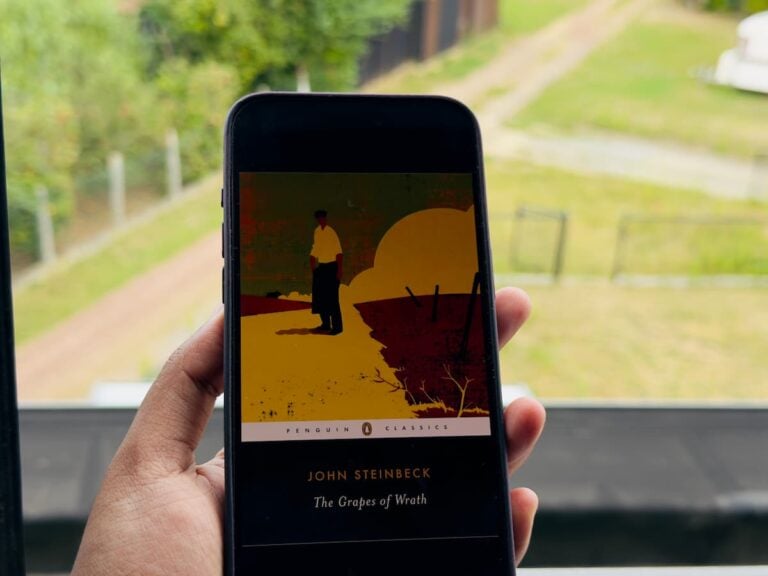
The Grapes of Wrath by John Steinbeck

The Joad family loses its Oklahoma farm during the Great Depression and Dust Bowl and heads to California hoping to find work. Instead, they encounter hunger, exploitation, terrible working conditions, and thousands of other families just as desperate as they are. Steinbeck uses one family’s journey to show the huge divide between people who had power and those simply trying to survive. It’s heavier than most of these books, but few novels capture Depression-era America quite like this one.
The Pulitzer Prize-winning epic of the Great Depression, a book that galvanized—and sometimes outraged—millions of readers.
First published in 1939, Steinbeck’s Pulitzer Prize-winning epic of the Great Depression chronicles the Dust Bowl migration of the 1930s and tells the story of one Oklahoma farm family, the Joads—driven from their homestead and forced to travel west to the promised land of California. Out of their trials and their repeated collisions against the hard realities of an America divided into Haves and Have-Nots evolves a drama that is intensely human yet majestic in its scale and moral vision, elemental yet plainspoken, tragic but ultimately stirring in its human dignity. A portrait of the conflict between the powerful and the powerless, of one man’s fierce reaction to injustice, and of one woman’s stoical strength, the novel captures the horrors of the Great Depression and probes into the very nature of equality and justice in America. At once a naturalistic epic, captivity narrative, road novel, and transcendental gospel, Steinbeck’s powerful landmark novel is perhaps the most American of American Classics.
BUY NOW ON AMAZON | LISTEN FREE ON AUDIBLE
In Dubious battle by John Steinbeck
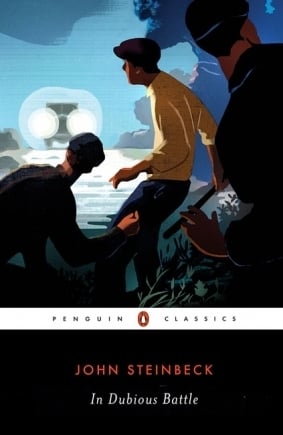
Set among migrant workers in California during the 1930s, the story follows Jim Nolan as he becomes involved in organizing apple pickers who are fighting for better treatment and wages. What begins as a labor strike quickly grows more dangerous and complicated. It’s especially interesting if you want historical fiction focused on workers, landowners, inequality, and the labor struggles happening during the Depression.
At once a relentlessly fast-paced, admirably observed novel of social unrest and the story of a young man’s struggle for identity, In Dubious Battle is set in the California apple country, where a strike by migrant workers against rapacious landowners spirals out of control. Caught in the upheaval is Jim Nolan, a once aimless man who finds himself in the course of the strike.
BUY NOW ON AMAZON | LISTEN FREE ON AUDIBLE
Of Mice and Men by John Steinbeck
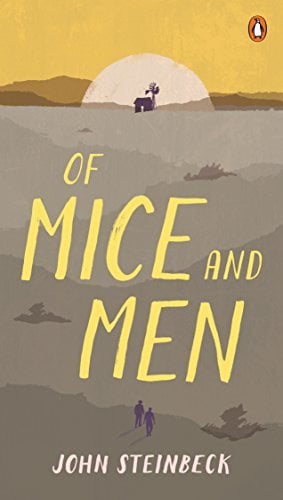
George and Lennie are two migrant workers moving from job to job in Depression-era California, dreaming that one day they’ll have a little piece of land of their own. George looks after Lennie, who has an intellectual disability, and their friendship gives both men something to hold onto in an uncertain life. Of Mice and Men is short and easy to get through, but the story says a lot about loneliness, poverty, friendship, and how fragile the American Dream could be during the 1930s.
They are an unlikely pair: George is “small and quick and dark of face”; Lennie, a man of tremendous size, has the mind of a young child. Yet they have formed a “family,” clinging together in the face of loneliness and alienation. Laborers in California’s dusty vegetable fields, they hustle work when they can, living a hand-to-mouth existence. But George and Lennie have a plan: to own an acre of land and a shack they can call their own.
While the powerlessness of the laboring class is a recurring theme in Steinbeck’s work of the late 1930s, he narrowed his focus when composing Of Mice and Men, creating an intimate portrait of two men facing a world marked by petty tyranny, misunderstanding, jealousy, and callousness. But though the scope is narrow, the theme is universal: a friendship and a shared dream that makes an individual’s existence meaningful.
A unique perspective on life’s hardships, this story has achieved the status of timeless classic due to its remarkable success as a novel, a Broadway play, and three acclaimed films.
BUY NOW ON AMAZON | LISTEN FREE ON AUDIBLE
Also read
8 Historical Fiction Books I’m Begging Your Book Club to Read Before 2026 Ends
16 Books to Read If You’re Still Thinking About Theo of Golden
18 Holocaust Historical Fiction Books Readers Say Are 10/10
9 Historical Fiction Audiobooks That Are 10/10 From Start to Finish